ISO 14644 is the international standard family that defines how clean a cleanroom’s air must be, and how to prove it. Part 1 classifies rooms by the concentration of airborne particles per cubic metre of air. Part 2 sets out monitoring and requalification requirements. Part 3 defines the test methods themselves. When someone says a room “is ISO 7”, they mean it has been tested against the ISO 14644-1 particle limits for that class and passed.
Cleanroom testing, in practice, means two core activities: particle count testing at calculated sample locations using a calibrated particle counter, and integrity testing of the installed HEPA filters to confirm they are leak-free. A technician does both on site, and the results go into a report your auditor will ask to see. If you manage a pharma facility, laboratory, hospital or medical-device plant in South Africa, this guide covers what the standard requires, what the tests involve, how often they are due, and how to brief procurement. Prebur offers this as an on-site service: details on our air testing page.
What ISO 14644 Actually Covers
ISO 14644 is a family of standards, and three parts matter for day-to-day facility management:
- ISO 14644-1:2015 covers classification of air cleanliness by particle concentration. It defines the class limits (ISO 1 through ISO 9) and the method for demonstrating compliance. Classification uses light-scattering discrete airborne particle counters, with threshold particle sizes from 0.1 µm to 5 µm.
- ISO 14644-2 covers monitoring and requalification: how you demonstrate continued compliance between formal tests, and the maximum intervals at which a room must be reclassified.
- ISO 14644-3:2019 defines the supporting test methods: air pressure difference, airflow velocity and volume, airflow direction and visualisation, installed filter system leakage, recovery, containment leak, temperature and humidity.
Two of those Part 3 methods matter most in an audit. The installed filter system leakage test verifies that the final HEPA installation is free of bypass leakage and media or frame defects. The containment leak test checks that unfiltered air from outside the room is not finding its way in. Together with the particle counts, these tell you whether the room does what its classification claims.
Cleanroom Classes Explained: ISO 5 to ISO 8
Cleanroom classification under ISO 14644-1:2015 works on maximum permitted particle concentrations per cubic metre, counted cumulatively at or above a stated particle size. The classes most South African facilities work with:
| ISO Class | Max particles/m³ ≥0.5 µm | Max particles/m³ ≥5.0 µm |
|---|---|---|
| ISO 5 | 3,520 | No defined limit (removed in 2015 revision) |
| ISO 6 | 35,200 | 293 |
| ISO 7 | 352,000 | 2,930 |
| ISO 8 | 3,520,000 | 29,300 |
Each class steps up by a factor of ten. Two notes on the 2015 revision: the ≥5.0 µm limit for ISO 5 was dropped because sampling at such low concentrations is statistically unreliable, and a separate “M descriptor” was introduced for reporting macroparticles in the cleaner classes. For ISO 7 and ISO 8 rooms, limits at 0.1, 0.2 and 0.3 µm are not applicable.
For pharmaceutical work, the ISO classes map onto the EU GMP Annex 1 grades. This matters in South Africa because SAHPRA is a PIC/S participating authority: South Africa acceded to PIC/S on 1 July 2007 as its 31st and first African member, and SAHPRA has maintained that status since its establishment in 2018. SA pharma inspections therefore follow PIC/S-aligned GMP expectations, which use the Annex 1 grade system. The current Annex 1 was published in August 2022 and became effective on 25 August 2023.
| GMP Grade | At rest | In operation |
|---|---|---|
| A | ISO 5 | ISO 5 |
| B | ISO 5 | ISO 7 |
| C | ISO 7 | ISO 8 |
| D | ISO 8 | Not pre-defined (risk-based) |
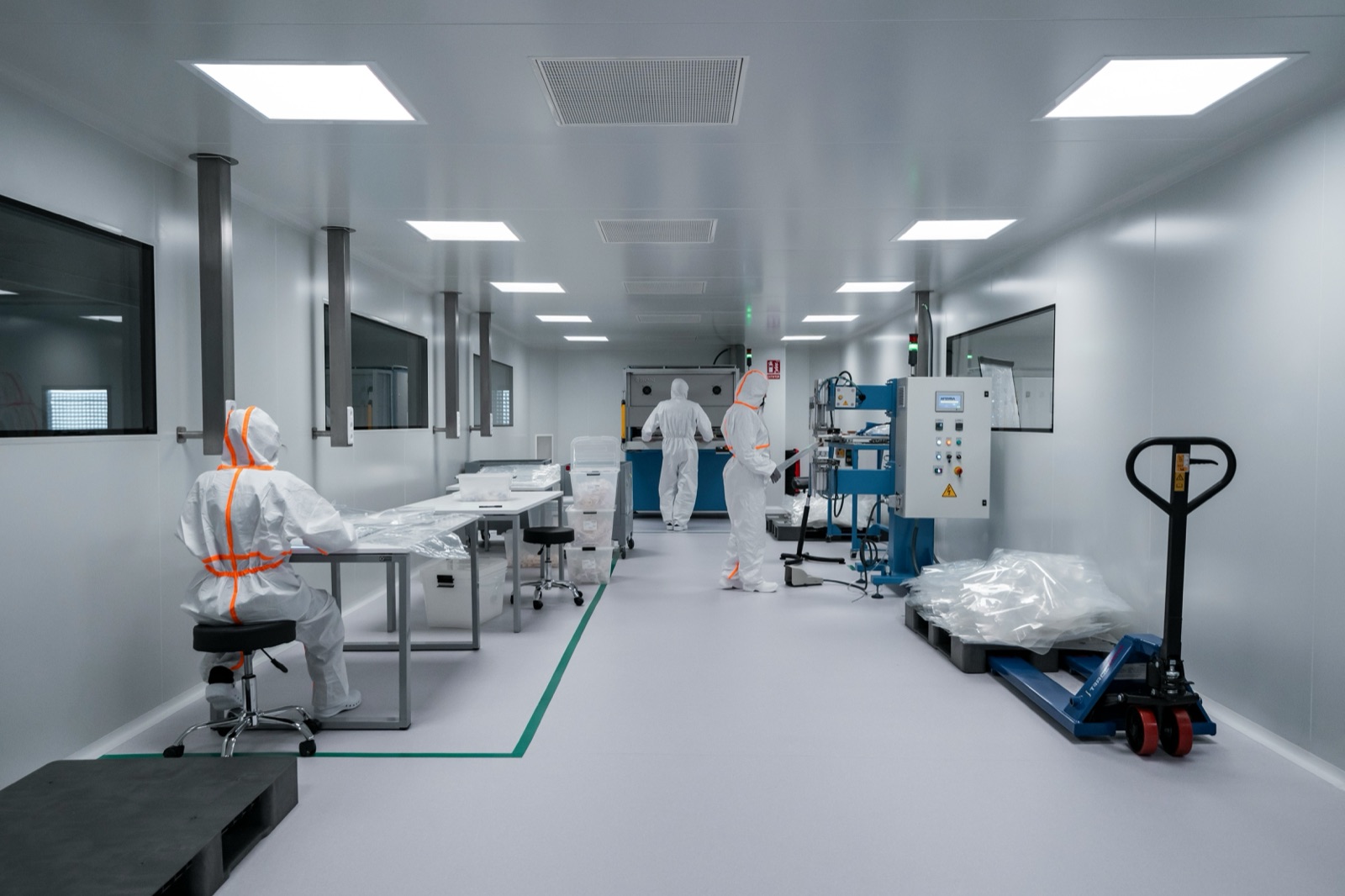
Annex 1 adds occupancy-state distinctions and microbial limits that ISO 14644 does not cover, so a GMP facility works to both frameworks at once. In application terms: ISO 5 is the critical zone for aseptic processing (Grade A, typically under laminar flow, RABS or isolators), ISO 7 and ISO 8 cover the Grade C and D areas where most pharma secondary manufacturing, solid-dose work and packaging happens, and ISO 8 is common for medical-device assembly.
What a Particle Count Test Involves On-Site
The room is divided into a grid, and the number of sample locations comes from a look-up table in the 2015 standard (Table A.1), based on room area. This replaced the 1999 square-root formula and generally increases the number of sample points. The statistical basis: at least 95% confidence that at least 90% of the room complies with the class limit.
Counting is done with a calibrated light-scattering discrete airborne particle counter. At each location the technician draws a defined volume of air and the counter reports particle concentrations at the relevant threshold sizes. Every location must meet the class limit.
The occupancy state matters as much as the numbers. ISO 14644-1 defines three:
- As-built: construction complete, HVAC running, no production equipment, no personnel.
- At-rest: equipment installed and operating as agreed, no personnel present.
- Operational: equipment running with the specified number of personnel doing normal work.
Operational is the most stringent, and most regulatory requirements specify classification in the operational state. Agree the state with your testing provider before the visit, because a room that passes at-rest can fail operational once people and processes add their particle load.
Your report should state the class tested against, the occupancy state, the number and position of sample locations, the counts recorded at each, the instrument and its calibration status, and a clear pass or fail per room. That document goes straight into your validation file. Note the wording: reports are issued in accordance with ISO 14644 methodology. A test report demonstrates compliance on the day of testing, nothing more.
DOP Testing: HEPA Filter Integrity On-Site
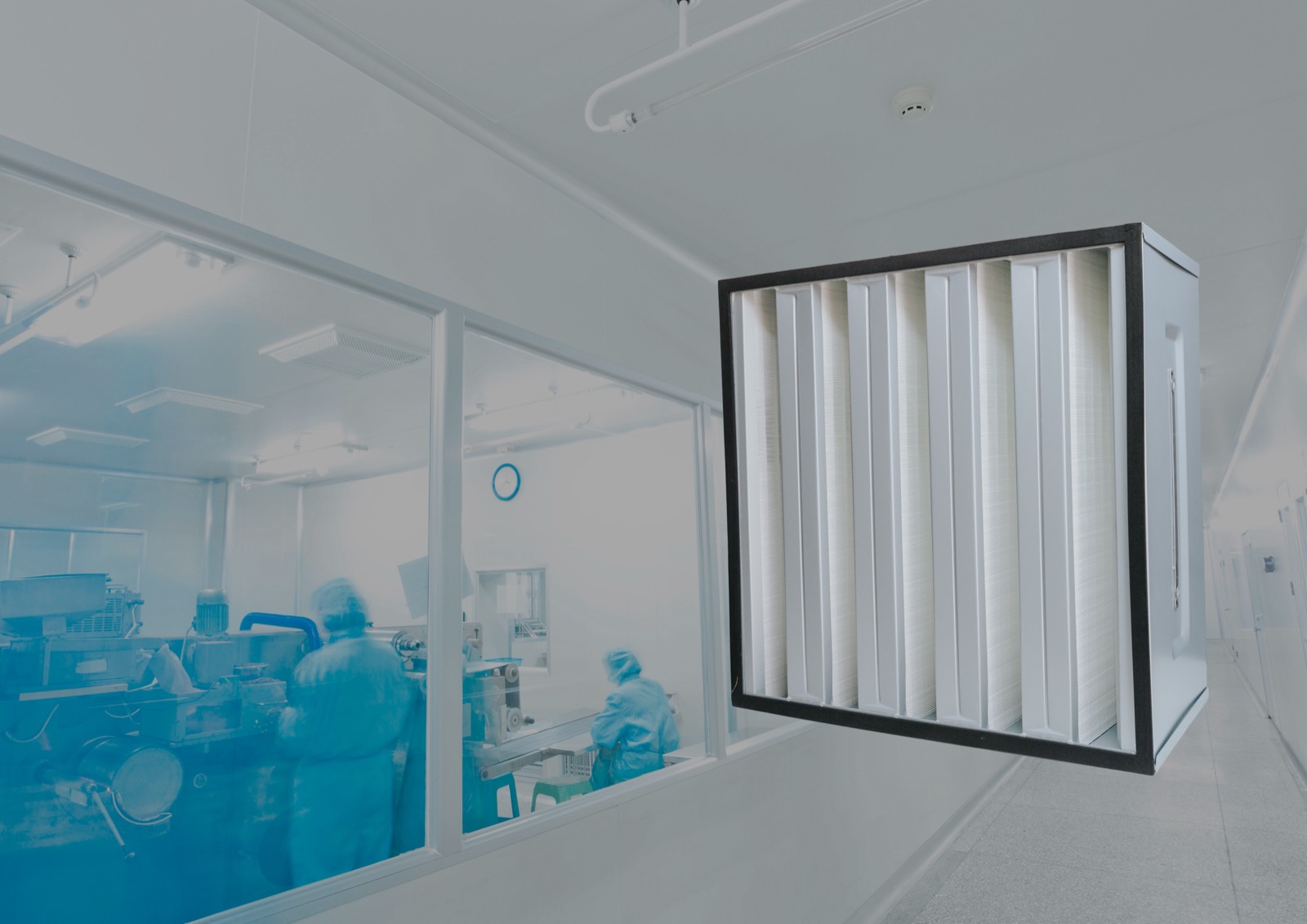
DOP testing (now more accurately PAO testing) is HEPA filter testing in its installed state. A challenge aerosol is dispersed into the airstream upstream of the installed HEPA filter, and a calibrated aerosol photometer probe is scanned across the entire downstream face, the frame and the seal. The probe traverses at no more than 5 cm/s with defined overlap between passes. The pass criterion under the ISO 14644-3 method: local penetration must not exceed 0.01% of the upstream challenge concentration. Anything above that is a leak: a pinhole in the media, a frame defect or a gasket bypass.
Older spec documents still say DOP. DOP (dioctyl phthalate, DEHP) was the original challenge aerosol, but it was reclassified as a suspected carcinogen. PAO (poly-alpha-olefin) replaced it: equivalent physics, and accepted by the FDA, EMA and ISO 14644-3. Many technicians and tender documents still say “DOP test” out of habit, and they mean the same scan.
Why is this separate from particle counting? They answer different questions. The particle count tells you the room air meets its class limit; the integrity scan tells you each installed filter is leak-free. A room can pass one and fail the other, which is why auditors expect both.
The integrity scan is not a re-test of filter efficiency. Efficiency is established at the factory under EN 1822, which rates the filter at its most penetrating particle size and assigns the grade: see our HEPA filter grades guide for what H13 and H14 mean. On site, the question is narrower: whether this filter, in this housing, is leak-free.
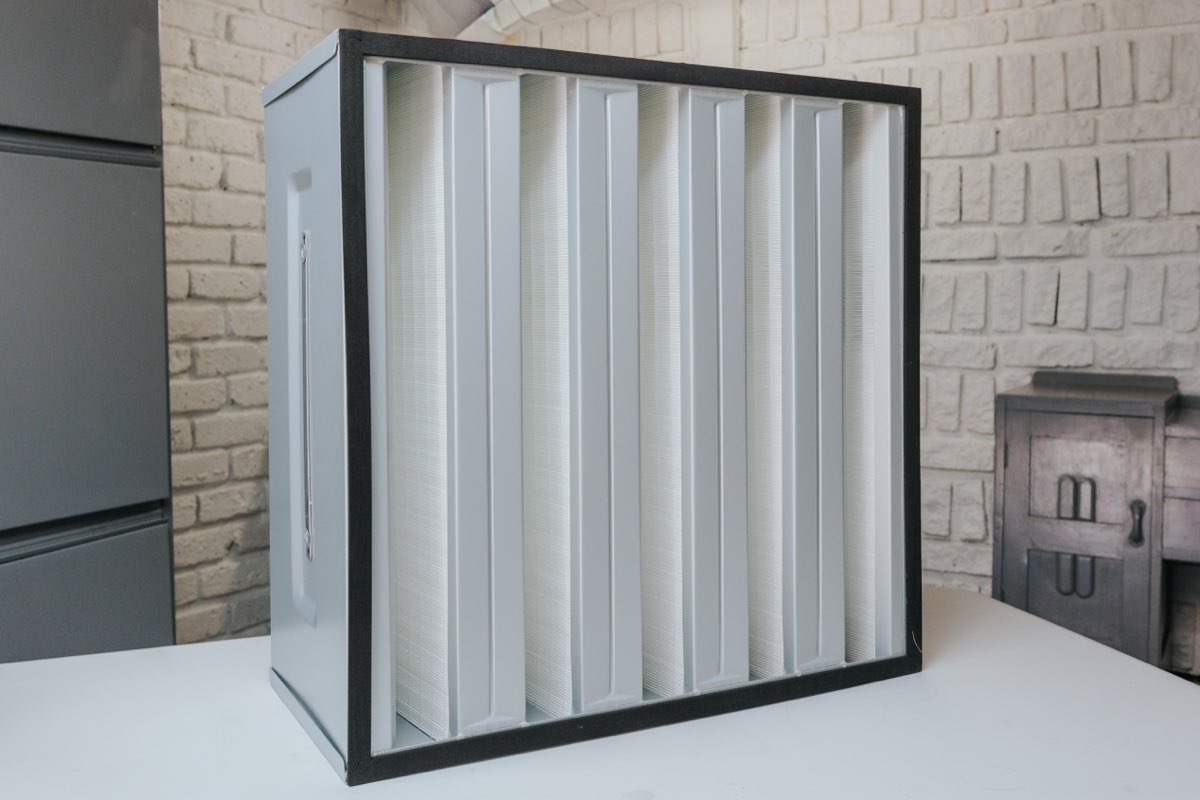
When a scan finds a failed filter, the practical fix is replacement and a re-scan before the room returns to service. We hold standard-size HEPA filters in stock in Silverton; non-standard dimensions are made to order on a 7 to 10 day lead time. Every HEPA unit, H13 and H14, ships with an individual serial-numbered EN1822 test certificate for your validation file. Certificates are a HEPA feature and are not supplied with G4, F9, or other non-HEPA grades.
How Often Is Cleanroom Testing Required?
ISO 14644-2 sets the maximum intervals for requalification by particle count:
| Class | Maximum requalification interval |
|---|---|
| ISO 5 and cleaner | 6 months |
| ISO 6, ISO 7, ISO 8 | 12 months |
Continuous particle monitoring can justify extended intervals where the documented data supports it. For most SA facilities without continuous monitoring, the practical rhythm is a full requalification every 12 months, and every 6 months for ISO 5 areas.
The calendar is not the only trigger. Testing is also typically required when:
- A new room or installation is commissioned: classification establishes the baseline before production starts.
- HEPA filters are changed: the new installation must be integrity-tested before the room goes back into service.
- A test result fails: after corrective work, the affected tests are repeated to confirm the fix.
- The room or HVAC is modified: any change that could affect airflow or filtration resets the clock.
For GMP sites, remember that PIC/S-aligned inspections look at the Annex 1 grades in the required occupancy states, not just the ISO paperwork, so plan requalification with the operational state in mind.
How to Brief Procurement for a Cleanroom Test
A testing quote is only as accurate as the brief behind it. Give procurement these details and the quotes you get back will be comparable:
- Room count and floor area per room, in m². Sample-location counts, and therefore time on site, are driven by area.
- Target class per room: ISO 5 to ISO 8, or the GMP grade if you work to Annex 1.
- Occupancy state: as-built, at-rest or operational. Say which one your regulator or client specification requires.
- Number of installed HEPA terminals if you need DOP/PAO integrity testing, since each filter is scanned individually.
- Any supporting tests required: pressure differentials, airflow volumes, recovery, per ISO 14644-3.
Then specify the paperwork. Ask for a report issued in accordance with ISO 14644 methodology, stating instruments used and calibration status, all raw counts per location, and a pass/fail per room against the stated class and occupancy state. That wording matters: it is the honest description of what a test report is, and it is what your auditor needs. Be wary of quotes that promise certification or accreditation of the report itself; no test provider certifies a standard.
One practical procurement point: ask what happens on a fail. Testing that finds a leaking HEPA on a Tuesday is worth far more when the replacement is a standard size on a shelf in Silverton rather than on an import lead time.
Prebur’s air testing service covers particle count testing and HEPA integrity testing, with Grant Lundie as our technical partner on the instrumentation side. Since 1989 we have supplied the filters these rooms run on, so the testing and the replacement stock come from one supplier. Call Nick on +27 74 159 1634 with your room list and he will confirm what the test visit needs to cover.
Need a cleanroom tested, or a failed filter replaced? Call Nick Els on +27 74 159 1634 or request testing.
Frequently Asked Questions
What is the difference between cleanroom testing and cleanroom certification?
They are usually the same activity under two names. The work is often searched for as cleanroom certification, but strictly a provider tests your room against ISO 14644 limits and issues a report in accordance with the standard's methodology. The room either meets its class limits or it does not.
How long does a cleanroom test take?
It depends on the sample-location count, which the standard derives from floor area, plus one integrity scan per installed HEPA filter. More rooms, larger areas and more terminals mean more time on site. Give your provider room areas and filter counts upfront and they can commit to a duration in the quote.
What happens if a room fails?
First, find the cause: a leaking filter, a pressure cascade problem, a door or seal issue, or process-generated particles. Corrective work follows, then the failed tests are repeated. A failed HEPA integrity scan usually means filter replacement, followed by a re-scan before the room returns to service.
How does ISO 14644 relate to EN 1822?
EN 1822 is a factory test: it rates a HEPA filter's efficiency at its most penetrating particle size and assigns the grade. ISO 14644 governs the room: class limits, test methods and requalification. The on-site integrity scan under ISO 14644-3 checks for installation leaks; it does not re-rate efficiency. Our HEPA filter grades guide covers the grading side.
What drives the cost of cleanroom testing?
Four things: the number of rooms, their floor areas (which set the sample-location counts), the number of installed HEPA filters to be scanned, and any supporting ISO 14644-3 tests you specify, such as pressure differentials or recovery. Occupancy state matters too: operational-state testing needs coordination with your production schedule.
Do South African operating theatres fall under ISO 14644?
Not directly. SANS standards (such as SANS 10173) govern theatre ventilation, while ISO 14644 supplies the cleanliness benchmarks and test methods that hospitals specify against. Hospitals may request particle counts and HEPA integrity testing on theatre air systems, particularly after filter changes or ventilation work.
Need help choosing the right filter?
Speak to Nick Els for expert advice on filter selection, cross-referencing, and pricing for your facility.